

News
Latest CIOCAN News
Articles from our partner, Digital Journal.

Canada’s AI reality gap: Why leaders need the truth from the frontline
As Canadian financial institutions increase their investment in artificial intelligence, a potentially expensive problem is emerging: senior executives and the employees expected to use AI may be experiencing the technology very differently.

Canada’s AI adoption is accelerating, but accountability is struggling to keep pace
Canadian businesses are rapidly adopting artificial intelligence, yet fragmented ownership, unsanctioned tools and uncertain executive responsibilities are making effective governance increasingly difficult.

What Calgary’s outlook means for tech leaders pitching AI
Calgary's business leaders say companies are spending to replace what they own. How tech leaders should pitch AI in 2027, and what CEOs should ask.

Canada’s top technology leaders honoured at 2026 CanadianCIO Awards
Technology leaders in aerospace, pensions, medical regulation, utilities and auto retail took home this year's CanadianCIO of the Year Awards.

A particle accelerator still runs on people
At TRIUMF, Pradeep Nair is making cyber risk personal, helping colleagues understand one another, and asking what happens to data after an experiment.

Why machine-learning training shapes this regulator’s AI calls
Arun Dixit spent six years in a machine-learning PhD program. At Professional Engineers Ontario, he keeps AI to scheduling and agendas.

Years of data cleanup bought this regulator an AI head start
Eben Engelbrecht spent years cleaning up data for problems the College of Physicians and Surgeons of Ontario already had. When AI arrived, that work meant the college was ready.
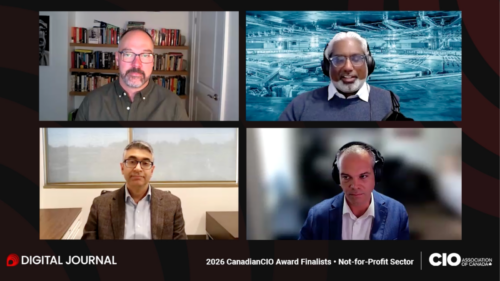
For these not-for-profit CIOs, AI can’t risk public trust
Digital Journal sat down with three not-for-profit CIO of the Year finalists to talk board trust, budgets, and careful AI.

The steps nobody thought to write down
John Comacchio has run Teknion's technology by watching how people work, and his agent trials keep finding work nobody wrote down.
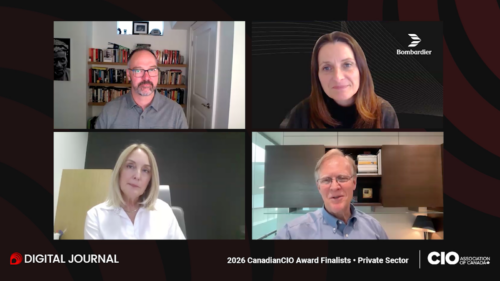
Humans might be cheaper than the robots after all
Three private sector CIO finalists on token bills, chargeback, and the work that never needed an agent.

Why technology governance keeps getting harder
Fawn Annan Memorial Award finalists Jennifer Hutton and Helen Knight on build versus buy, shadow AI, and keeping governance ahead of new tools.

When the IT job becomes the risk job
How Jennifer Hutton of Steele Auto Group treats cybersecurity as business continuity, from outage fallbacks to managing shadow AI.

The case for new tech starts with the cost of the old
Helen Knight on putting a price on legacy systems before making the case for something new, and doing more with a small budget.
In conversation with Canada’s CISO of the Year finalists
Rob Antonishen and Biying He talk with Digital Journal about AI agents, access, and accountability.

How to show a board that security is working
Biying He brings an accountant's discipline to cybersecurity at TransLink, backing every result she reports with a number.

What comes first when cybersecurity never ends?
Rob Antonishen on deciding what B.C. Hydro protects first, why compliance is only the floor, and keeping his team from burning out.

When AI writes the code and ships it at 3 a.m.
Boards are pushing Canadian companies to use AI. The code is now shipping itself, unchecked, with the company on the hook for what happens next.

CIOCAN’s push to bring more CIO voices into board governance
For senior technology leaders, influence in the boardroom is no longer optional.

CIOs talk AI readiness, cyber threats and the human cost of leading through both
AI threats, governance gaps, and what happens when the people running the systems push too hard for too long.

AI is going around IT and CIOs know it
At CIOCAN's sold-out Peer Forum in Vancouver, Canada's technology leaders spent a day wrestling with the gap between AI expectation and the daily reality of getting there.

What agentic AI breaks and why nobody sees it coming
As organizations rush to deploy agentic AI, the systems meant to control it are still catching up. Lenovo's John Encizo explains where things break, and why those failures are often hard to see.
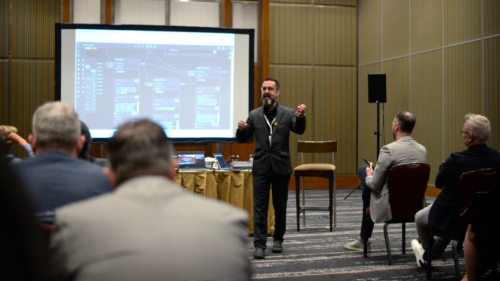
Who owns your AI memory
The platforms powering AI are already changing the terms. The race to avoid vendor lock-in is underway, and Canadian leaders need to be in it.

Why strong security programs still fail
Andrew Archibald warns that companies "round up their grades" on security, leaving everyday risks hidden inside working systems.
Why digital sovereignty is becoming a business issue
As AI systems learn from company data, CIOs are confronting a harder question about ownership, control, and digital sovereignty.

The trust gap holding CIOs back in the AI era
AI has raised expectations for CIOs, but credibility inside the business still determines how much influence they have.

If AI moves fast, leadership has to move faster
AI can give you an answer or draft a plan in seconds. Then what?

When impact meets integrity: not-for-profits rethink data and AI
As AI adoption grows, not-for-profits face a new test of leadership: turning digital progress into public accountability.
The Cloud reckoning: Canadian CIOs face hard truths on cost and ROI
As cloud adoption expands, Canada's competitiveness will rely on CIOs building the foundations that turn digital investment into measurable outcomes.
Navigating the AI paradox in cybersecurity
CISOs double down on Zero Trust and identity to counter generative AI-fueled threats.

Why digital maturity is now a survival issue for Canada’s nonprofits
With funding stretched and demand rising, nonprofits are turning to digital maturity and data integration to protect their missions and strengthen long-term impact.
Why CISOs are becoming Canada’s strategic risk translators
Cybersecurity has shifted from being a technical headache left to IT to being a critical financial and governance challenge for the Canadian enterprise.

Canada’s AI push is running into a systems problem
When Catherine Desgagnés-Belzil left her hometown to work in the kitchens of Lake Louise, she didn't imagine she'd one day oversee a nationwide technology transformation.

Inside the Canadian Cancer Society’s award-winning digital transformation
As CIO of the Canadian Cancer Society, Lesa O'Brien shows that innovation in non-profits is about trust, culture, and real impact.

How Western University turned cybersecurity into a campus-wide priority
Inside Western University's effort to make cybersecurity a shared responsibility across a constantly changing campus.

The green light: How Beneva re-architected its future
A merger gave Catherine Desgagnés-Belzil the rare chance to build a modern digital ecosystem from the ground up.
Nova Scotia puts citizens at the centre of its digital health overhaul
A focus on citizen experience is reshaping how Nova Scotians access and manage their health information.

Transformation takes centre stage at the 2025 CanadianCIO Awards
The 2025 CanadianCIO Awards highlight how Canada's technology leaders are rebuilding systems, trust, and institutions for a digital economy.

How CIOs can prepare for the next data request
Inventories, categorization, and clear plans can protect CIOs from legal risk.

AI shame and hybrid disengagement show why trust is the real workplace currency
Hybrid disengagement and AI shame may look different but both prove that trust is the real workplace currency.

Ecosystems make or break technology adoption
At CIOCAN's Peer Forum in Ottawa, CTO Michael Lewis shared candid lessons on checkpoints, failure, and the hard work of getting adoption right.

Expanding the influence of Canada’s CIOs
Graduates of the CIO.D designation are applying governance skills to help boards and executives make better technology decisions.

Canadian CIOs are preparing for a bigger role in corporate strategy
In 2024, 88% of Canadian technology leaders said it was difficult to keep pace with the accelerating rate of technological change.
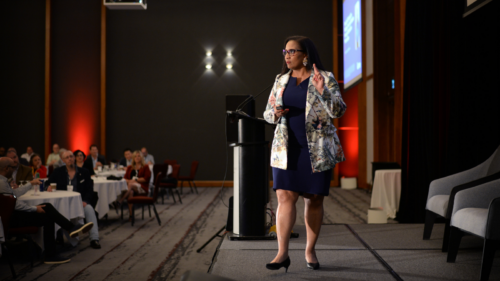
The leadership marathon CIOs must run to earn trust and influence
"We have to build a foundation of trust," she said. "It truly unlocks strategic partnerships."

‘The cyber weather is always bad’: Leaders call for stronger collaboration to face evolving digital threats
"The cyber weather is always bad, much worse than Ottawa," said Yarker, Commander of the Canadian Armed Forces Cyber Command.

CIOs confront AI’s double edged sword: Leadership and accountability
"We are all the two-faced gods of our businesses," said Gaetano Mazzuca.

CIO of the Year Awards return to spotlight Canada’s top tech leaders
Revived honours introduce new categories, national visibility, and a CIOCAN Hall of Fame.

What growing up in constant change taught Jay Kiew about leading through it
Jay Kiew didn't plan to build a life around navigating disruption. But disruption found him anyway.
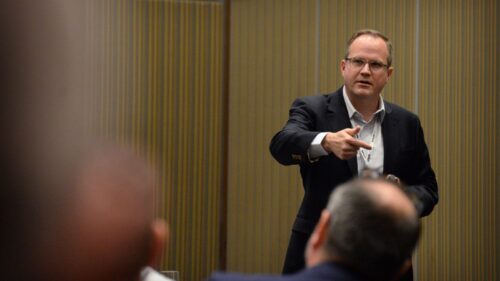
Hundreds of CIOs gather in Ottawa to discuss trust, AI, and the pace of change
Hundreds of CIOs gathered in Ottawa to confront trust, pressure and complexity, and to share what real leadership looks like when transformation gets hard.

From AI experiments to board conversations: A look inside Calian’s tech strategy
For Mike Muldner, CIO and CTO at Calian Group — a global technology and solutions company — the real work begins with integration.

Stepping into a new tech leadership role? Start by listening, not fixing
Vulnerability is not a weakness. It is a leadership skill.
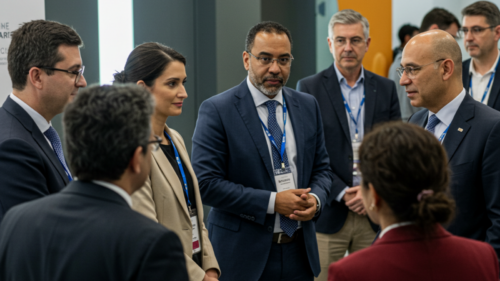
Inside CIO Peer Forum 2025: The rise of the makers transforming tech leadership
The CIO Association of Canada is set to host its annual CIO Peer Forum in Ottawa, Ontario, from May 28–29, 2025. This year's theme: The Rise of the Makers.

The role of the CIO has changed. So why are we still calling it IT?
Today, technology leaders are business leaders.

Gaetano Mazzuca: Bringing creativity back to technology leadership
Gaetano Mazzuca's career path hasn't followed the typical arc of an IT leader. Before becoming the CIO of the City of Red Deer, he started in the arts.

Beyond technology: How CIOs can lead AI-driven business change
As AI continues to evolve, one thing is clear: technology leaders who ignore it risk falling behind.